Recycling & Sustainability at Gardeners Finchley
Welcome to our overview of how Gardeners Finchley is building an eco-friendly waste disposal area and a practical, sustainable rubbish gardening area. We balance everyday garden maintenance with a strong environmental ethic: reducing landfill, reusing materials, and creating low-carbon solutions for collection and reuse. Our approach is rooted in local practice, borough waste separation schemes, and measurable targets that keep our community accountable.Targets, Measurement and the Borough Approach
We have set a clear recycling percentage target of 65% diversion from landfill by 2030, combining reuse, composting and recycling streams. This target aligns with wider borough efforts that emphasise separate collections for organics, dry mixed recycling and textiles. The borough's approach to waste separation — food caddies, garden waste bins and dry recycling boxes — guides our on-site sorting, ensuring materials from gardens are captured at the source and routed to the correct local facilities.
Local Transfer Stations and Processing Hubs
Our service uses municipal and regional transfer stations to minimise travel and handling: we consolidate garden waste and recyclables at local transfer hubs before onward processing. Typical partner locations include community transfer stations in the borough and neighbouring North London facilities. Key processing routes we use include:
- Green waste consignment to municipal composting facilities
- Dry recycling streams (glass, metal, plastic, paper) to local sorting centres
- Bulky garden material and wood to specialised reuse or biomass facilities
Charity Partnerships and Material Reuse — We actively partner with local charities and reuse organisations to extend the life of garden materials. Rather than discarding usable pots, tools, and reclaimed timber, we coordinate drop-offs and donation runs with community groups, social enterprises and charities such as local allotment projects, community growing schemes and organisations supporting household reuse. These collaborations reduce waste and create social value by supporting training, volunteering and allotment initiatives.
 We are transitioning to a fleet dominated by low-emission, low-carbon vans. Electric and hybrid vehicles are used for short urban trips, and route optimisation software reduces mileage and idling. Combining efficient logistics with clean vehicles shrinks the carbon footprint of collections, making the eco-friendly waste disposal area genuinely low-impact from collection to processing. Our drivers are trained in eco-driving techniques to further reduce emissions.
Composting, Mulch and the Sustainable Rubbish Gardening Area — On-site composting and mulching are central to sustainable garden waste management. Leaf, twig and soft green waste are segregated and turned into nutrient-rich compost or mulch. Hard wood and bulky brash are chipped and either reused on-site or sent to specialist wood-processing facilities. This reduces the need for chemical inputs in soil and closes nutrient loops within our projects.
Designing an eco-friendly waste disposal area means deliberate layout and clear segregation. Our bins and bays are colour-coded and signed so team members and contractors can sort waste quickly: organics, mixed recycling, glass, small electricals, textiles and residual waste each have a dedicated bay. Training sessions ensure consistent handling, and visual audits track contamination rates so we can improve separation performance over time.
 Community engagement is vital. We run seasonal collection days for bulky items, plant pots and soil, and organise reuse markets where items are exchanged within the neighbourhood. Partnerships with charities allow us to redirect suitable tools and materials to social projects instead of sending them to landfill. These programmes support the circular economy and foster local ownership of sustainable rubbish gardening area practices.
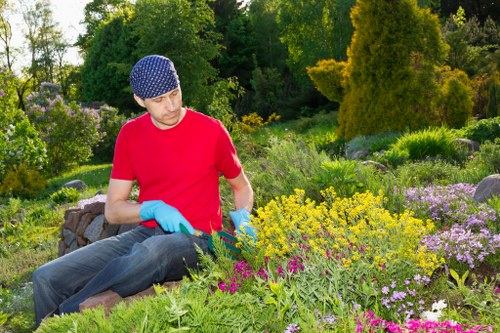 Practical recycling activities for the Finchley area include the routine separation of:
- Garden waste: collected and composted or mulched
- Dry mixed recycling: plastics, paper and metal segregated according to borough bins
- Glass and ceramics: directed to local bottle banks and glass processors
- Textiles and small household items: sorted for charity reuse
- Wood and bulky green waste: chipped for biomass or onsite reuse
- Small WEEE (waste electricals): captured separately and sent to specialist recyclers
Monitoring Progress and Reporting
We publish performance summaries that show tonnages diverted, reuse volumes and emissions reductions from our low-carbon fleet. Regular audits against our 65% recycling goal ensure transparency and continuous improvement. Data-led action helps prioritise investments — whether in more EV chargers, increased composting capacity, or deeper charity partnerships — to keep our footprint shrinking.Why this matters for Gardeners Finchley
Adopting an integrated model for an eco-friendly waste disposal area and a sustainable rubbish gardening area benefits biodiversity, soil health and community resilience. It reduces the cost and carbon of disposal while creating resources for reuse and regeneration. By working closely with borough schemes, transfer stations and charitable partners, Gardeners Finchley demonstrates a replicable, low-carbon approach to garden waste and recycling in urban neighbourhoods.We are committed to evolving practices that respect municipal separation rules, widen reuse opportunities and expand our low-emission vehicle fleet. Through clear targets, local partnerships and practical on-site systems, Gardeners Finchley aims to be a model for sustainable garden services and responsible waste stewardship in Finchley and beyond.

